
Seven caps. A goal at Hong Kong Stadium. An Asian Games semifinal. Kyle Lau could’ve kept playing — instead he’s leaving pro football for Tsinghua. In a wide-ranging interview, he explains his decision and whether he’ll ever be back.
On certain afternoons, when the light falls just right across Hong Kong Stadium, Kyle Lau still catches himself looking toward the pitch instead of through it.
Hong Kong now play in front of sellout crowds at the new Kai Tak Stadium, but Lau’s favourite memory remains rooted at the venerable, old ground.
He grew up in Causeway Bay, close enough that Hong Kong Stadium was part of the landscape outside his window. As a boy, he’d imagine himself playing there one day — not the impossible fantasy of Old Trafford or the Camp Nou, but something tantalizingly close, yet far enough to feel unattainable.
“I live where I can see Hong Kong Stadium from my house,” the 24-year-old says. “Since I was young, I always told my parents, ‘I want to play there one day.’ Then I ended up scoring there as well.”
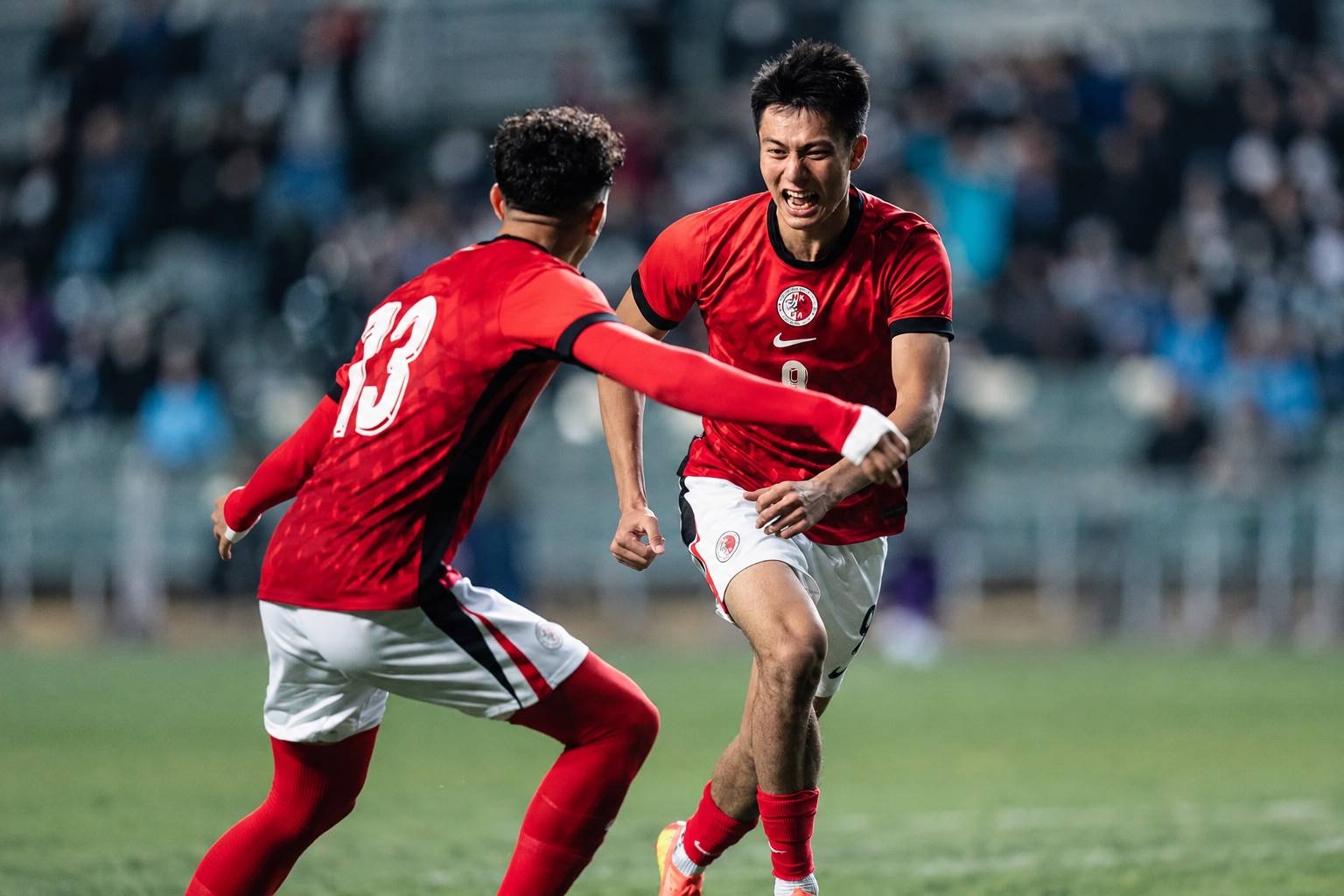
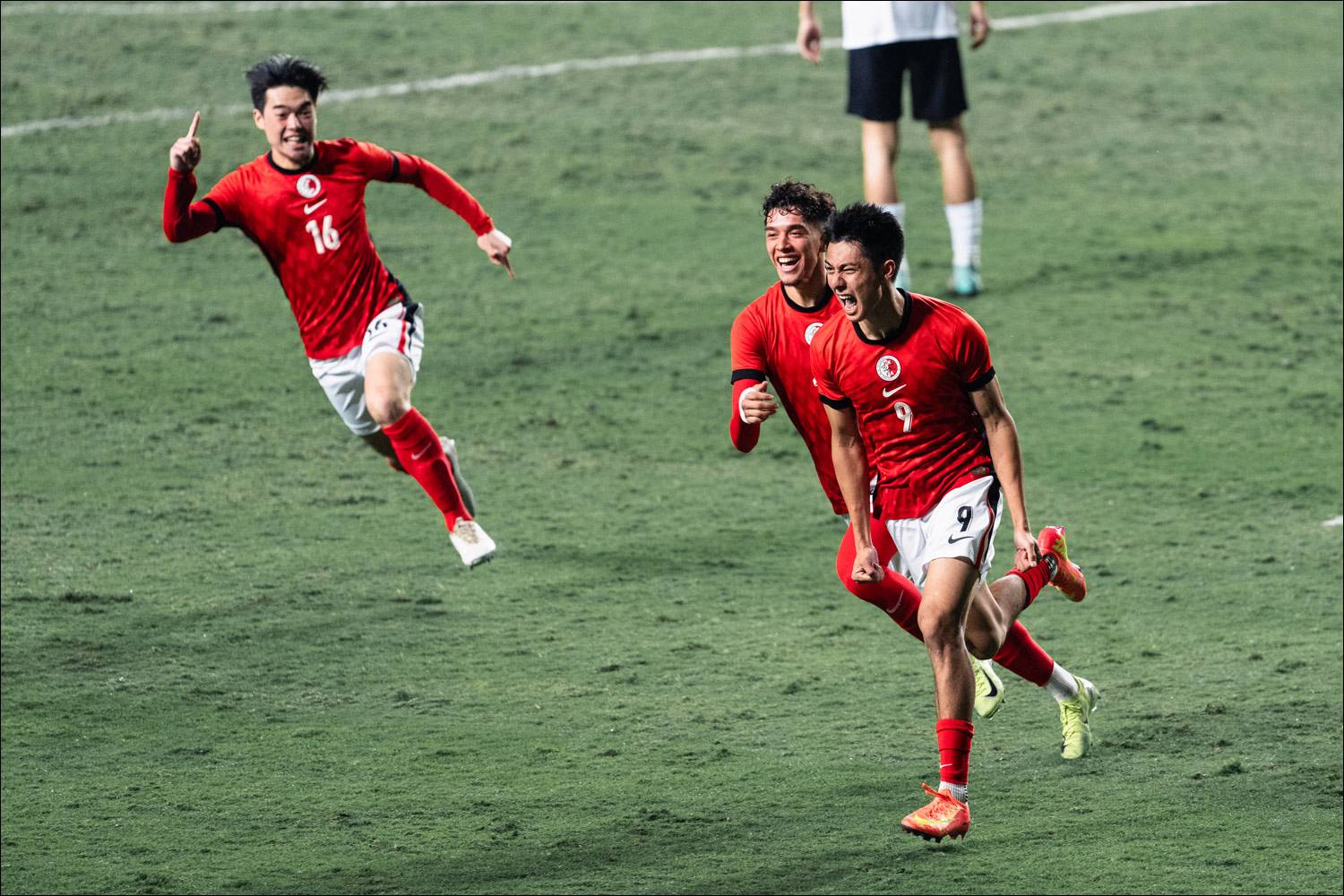
Years later, the dream unfolded exactly where it began. Trailing Guangdong in the Guangdong-Hong Kong Cup, Hong Kong head coach Darren Arnott challenged his players at half-time to start the second half aggressively and catch their opponents cold.
Twenty-three seconds after the restart, Lau tucked in the equalizer with his weaker left foot — his first senior goal for Hong Kong.
It’s an image that captures the contradictions running through Lau’s career. His story has all the makings of a football fairy tale: the local boy representing Hong Kong, scoring in the stadium he idolised, playing before 50,000 fans, sharing tournaments with some of Asia’s biggest stars.
But every milestone was preceded by a fork in the road — doubt, uncertainty, a chance taken, then a reward. Even now, as he pauses his career to complete a Master’s degree at Tsinghua University, Lau doesn’t know exactly where life will take him next.
Uncertainty, though, is where he feels most comfortable.

Football entered Lau’s life before he can remember choosing it.
His mother, wanting her youngest child to stay active, introduced him to nearly every sport imaginable — swimming, tennis, football.
Football was the one that stuck.
“I just enjoyed it,” he says. “So, my mum kept putting me in classes.”
Growing up in Causeway Bay, with an older brother and sister ahead of him, sport and education were central to his childhood. At the Chinese International School, talk of university applications was as constant as talk of weekend fixtures. Most of his classmates expected to go to university after high school, and Lau was no different.
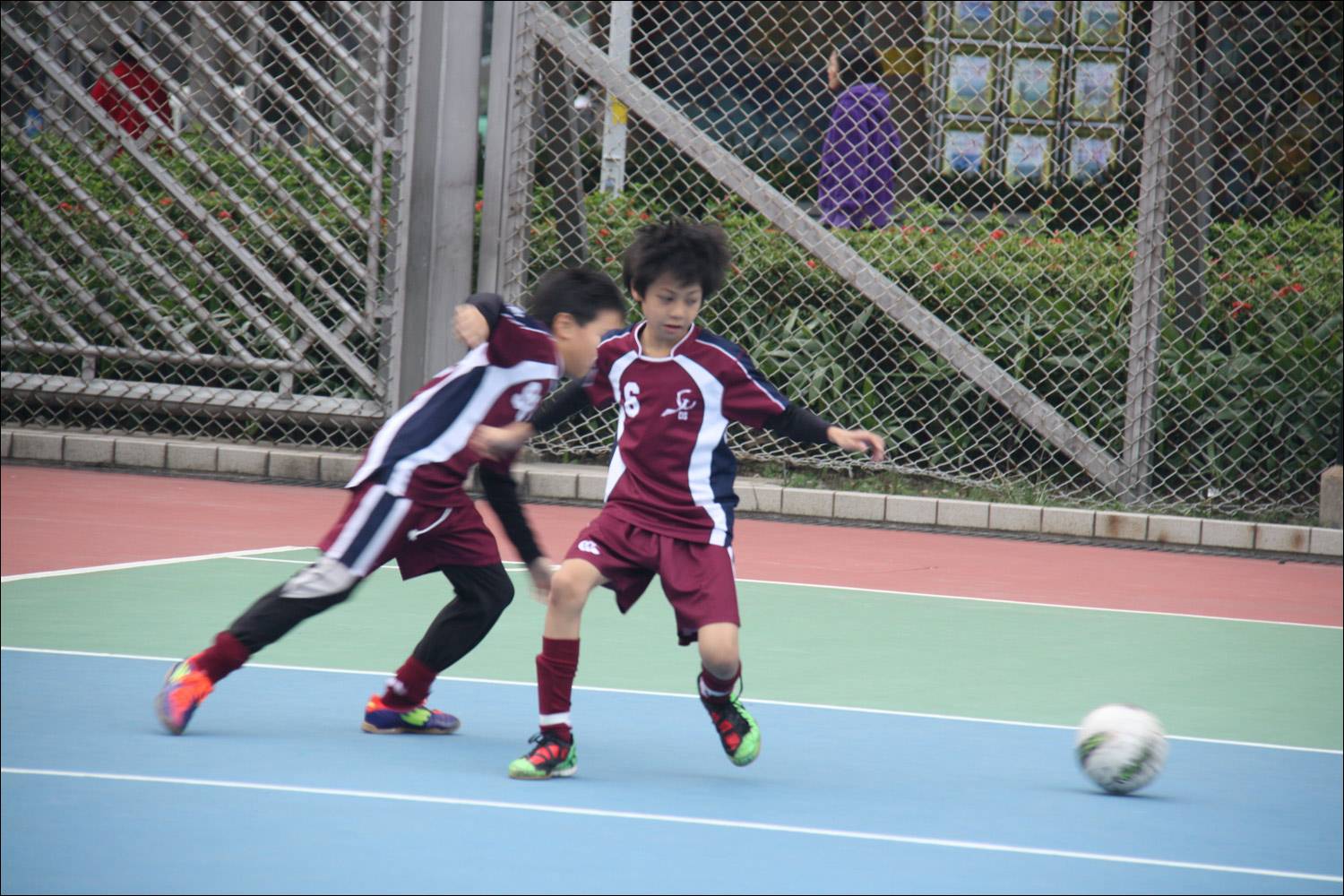
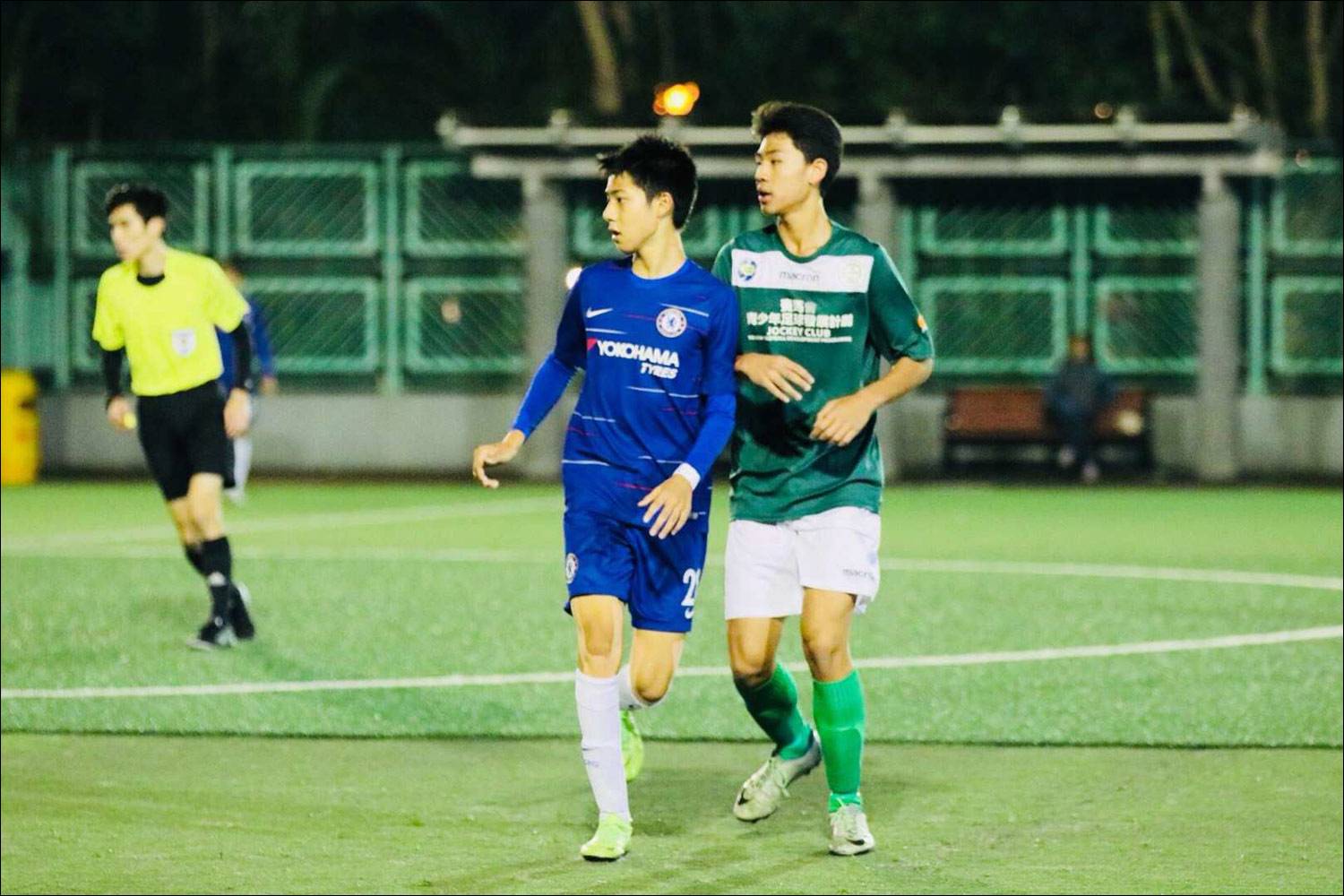
Outside school, his football education came through Chelsea Soccer School and Hong Kong Football Club, where he progressed through one of the territory’s strongest youth programmes while simultaneously earning selection for Hong Kong’s youth national teams. He first represented Hong Kong at the U13 level and earned his first international cap at U15.
From the outside, a path to professional football looked obvious.
(Provided by Kyle Lau)
Lau never saw it that way.
“Honestly, I never really thought I was proper good during my youth career,” he says. “I always thought I was pretty average. Playing for Chelsea Soccer School and HKFC, I thought I was probably middle of the pack, but never one of the top few.”
For years, becoming a professional never entered his thinking because he never believed he was good enough. Only after scoring against North Korea at a U19 tournament did the possibility briefly occur to him.
“I thought maybe I have some talent,” he says. “But I never really thought I would have a chance of making it in professional football. That thought never really crossed my mind.”
The admission feels almost incongruous given what followed. But at 18, a professional career seemed genuinely out of reach.
When the COVID-19 pandemic disrupted his plans, his parents encouraged him to take a gap year before heading to university in the United States.
Even then, he wasn’t chasing a professional career. R&F had intended to sign him before the club folded in 2020. Pegasus considered it before deciding against investing in a player they knew would soon leave for university. HKFC became the practical solution, allowing him to keep playing while preparing for the next stage of his education.
Giving up university was never on the table. If football was going to continue, it would have to coexist with his studies.
“I think it was the environment I grew up in,” Lau says. “At CIS, all my peers were going to college. That was just the natural next step after high school.”
(Provided by Kyle Lau)
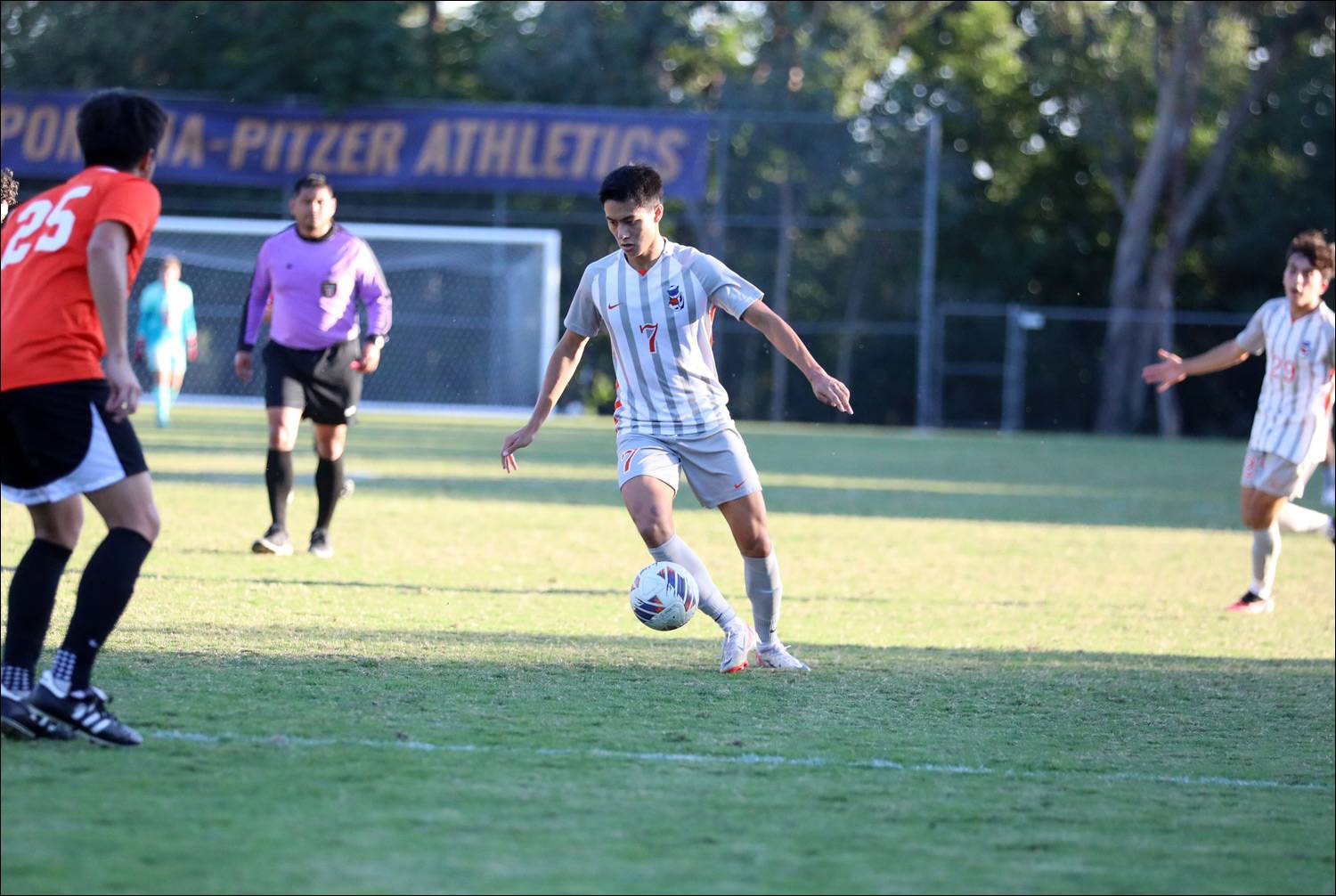
The American NCAA system offered Lau something he had always been searching for: a way to pursue his education without sacrificing football. When his application to MIT fell through despite building a relationship with the coaching staff, he enrolled at Pomona College in California instead.
It proved to be the right fit.
“I’ve always balanced both quite well,” he says. “There wasn’t really a decision where I had to give up one or the other.”
Pomona exceeded his expectations academically. On the pitch, it changed something more important.
Lau was named conference Newcomer of the Year and earned all-conference honours as a freshman — performances that suggested he belonged at a level higher than he’d ever let himself believe.
Despite his success, professional football remained distant.
“I thought I was going to play four years of collegiate football and then just not play ever again,” he says. “I didn’t know how big the gap was between college football and professional football in Hong Kong. I always thought it was too far of a goal for me to reach.”
Going into his sophomore year, his future seemed settled.
Then his phone rang.
On the other end was Szeto Man-chun.
It was a conversation that quietly changed the direction of his life.
The Hong Kong U23 national team needed forwards for the upcoming U23 Asian Cup qualifiers, and Szeto believed Lau could fill the gap. Szeto offered Lau a straightforward proposition: sign for HK U23, earn minutes in the Premier League and, if he performed, the opportunity to represent Hong Kong would follow.
Lau barely hesitated.
“Why not?” he remembers asking himself. “I want to represent Hong Kong because it’s something I’ve always loved doing.”
Lau admits the decision was never really about club football. Representing Hong Kong had always been the emotional centre of his career — the one ambition powerful enough to reopen a career he’d already mentally closed, even from thousands of miles away in California.
“For me, that was the biggest thing,” Lau says. “Being able to represent Hong Kong. That’s always been the end goal.”
The arrangement suited everyone. Lau would play for HK U23 during breaks from school, then fly back to California for his studies. Gradually, something unexpected happened.
He realized he belonged.
(Provided by Kyle Lau)
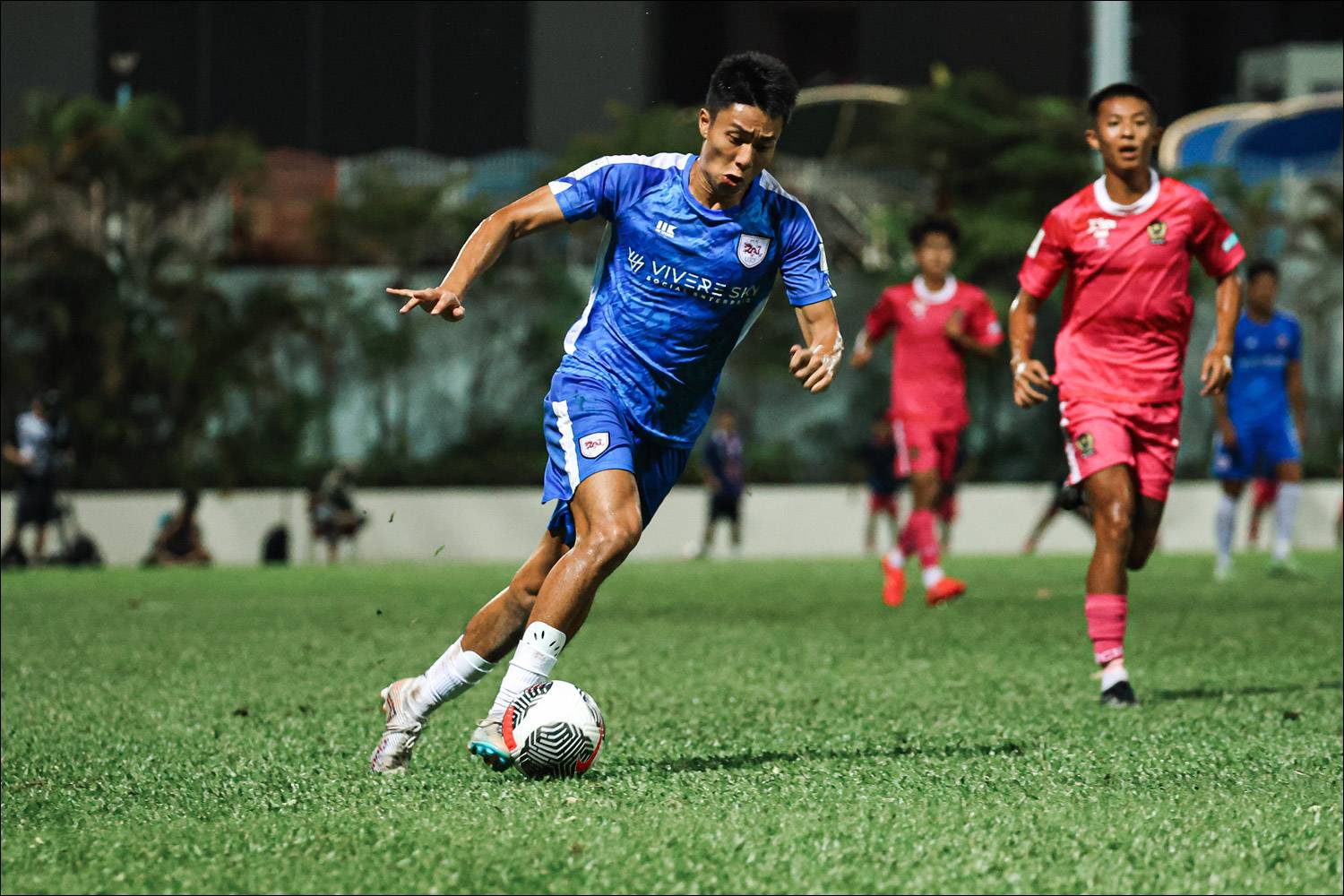
For years, he had convinced himself that the gap between Division III football and the Hong Kong Premier League was enormous. Instead, whenever he pulled on an HK U23 shirt, he found himself contributing rather than merely surviving.
“I had more good games than bad,” he says. “I also had decent contributions to the team. It was eye-opening for me to see that [playing professionally] was attainable. There were definitely certain things that I would need to work on, but if I worked on these things, then it’s possible for me to play in the Hong Kong Premier League.”
His time at HK U23 gave Lau a self-belief that hadn’t existed before. Now, professional football no longer felt like someone else’s dream.
After graduating from Pomona in December 2024, Lau returned to Hong Kong to train with HKFC, and later agreed to terms with the club. Before the paperwork went through, Szeto — by then an assistant coach at Lee Man — caught wind of his return.
“I heard you’re signing for HKFC,” he texted Lau. “Have you signed yet?”
Lau replied that he hadn’t.
Szeto immediately offered him an 18-month contract with one of Hong Kong’s top clubs.
It presented the first genuinely difficult decision of his life.
While training, Lau was progressing through final-round job interviews and preparing postgraduate applications. For the first time, football was competing directly with the career path he had always expected to follow.
“That was probably the time where I really, really thought about academics, work or football,” he recalls. “But my final decision was – I would regret it if I didn’t [try professional football].”
So, in January 2025, Lau officially turned pro.
For the first time, football came first.
Gone were the lectures between training sessions. No university timetable waiting in the background. No obvious safety net beyond the belief that he owed it to himself to find out how far he could go.
(Provided by Kyle Lau)
The romance of becoming a professional did not last long.
Lee Man were one of Hong Kong’s biggest clubs financially. They were league champions in 2023-24, and expected to challenge for every trophy available. Lau had arrived believing he was joining a stable contender.
But quickly, he learned how fragile success could be.
The Bees had surrendered the league title on the final day of the 2024-25 season after a campaign marked by costly mistakes. Lau is candid about the disappointment, but rejects the suggestion that the dressing room was fractured.
“There weren’t any big tensions,” he says. “Everyone was friends. The foreigners were super nice. We joked around all the time.”
An inflection point came midway through the following season.
In January 2026, influential midfielders Wong Wai and Barak Braunshtain left for opportunities in mainland China, stripping Lee Man of the players who controlled the rhythm of their midfield.
“They were really important for us—two players that can dictate the pace and tempo of the game,” Lau says. “Wong Wai is the best player I’ve ever played with in terms of controlling a football game.
“You have to respect the players for going to the next level because those opportunities don’t come around often. The problem wasn’t that they left. The problem was that we didn’t replace them.”
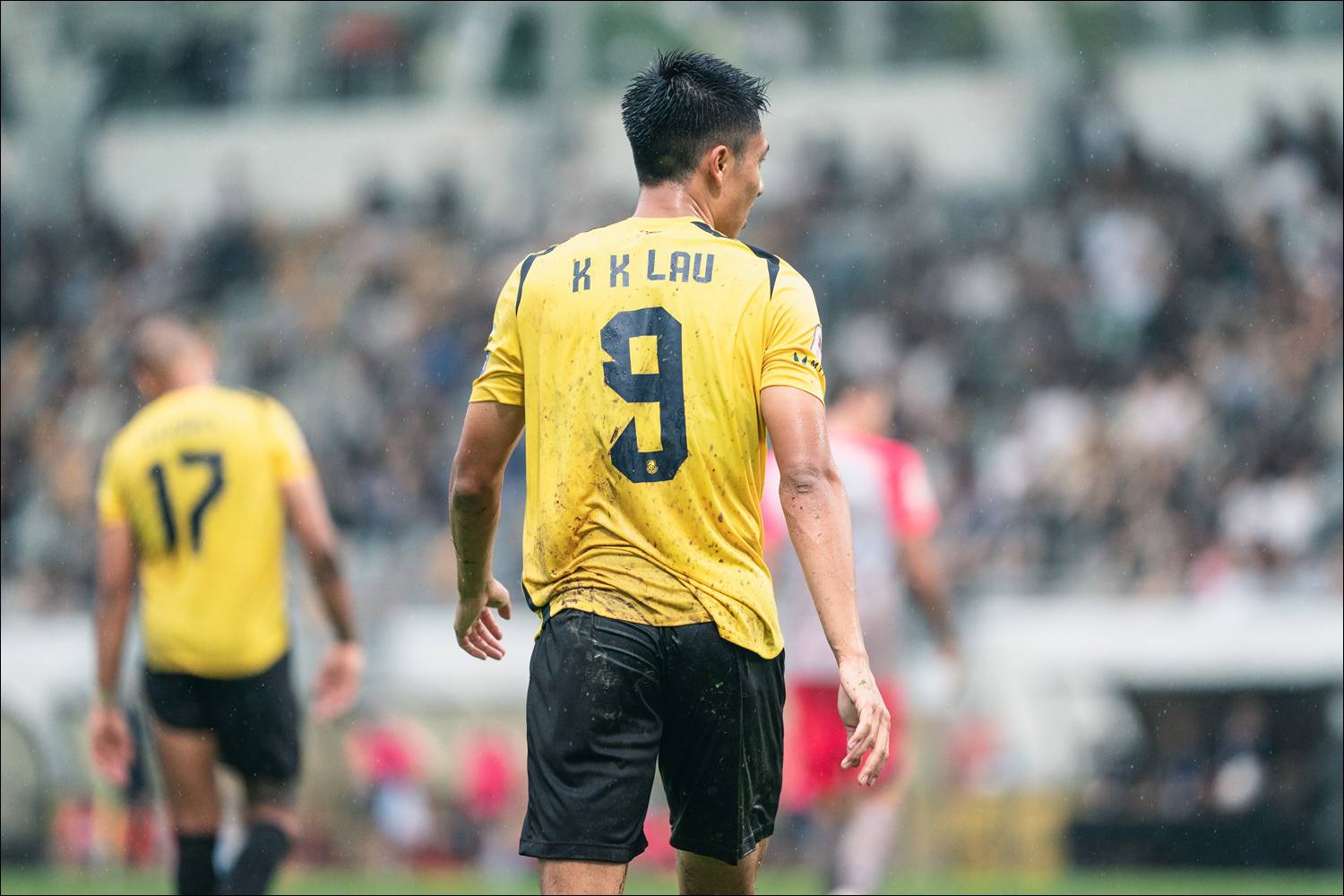
Lau believes the club missed an opportunity to reinforce a squad that was already stretched thin. By the second half of the season, injuries had become commonplace.
“I was already playing with an injury since January,” he says. “A lot of the squad were. At the time we were still level with Kitchee but we had very few fit guys.”
(Provided by Kyle Lau)
The instability permeated beyond the playing squad. Managerial changes brought fresh ideas and new training methods but it also meant another period of adjustment while the team was trying to compete for trophies.
Lau avoids criticizing individual coaches. Instead, he questions a system that encourages short-termism which rarely allows anyone enough time to build something lasting.
That, he says, is not unique to Lee Man. It is one of the defining problems in Hong Kong football.
“This is why I think being a footballer in Hong Kong is such a hard job,” he says. “There is no stability and there is no forward planning as to what the club wants to do with each player.
“Everyone’s on one-year contracts. Clubs change 15 or 16 players every year. A lot of players don’t even know whether they’re staying until May or June. That’s just too much volatility.”
The uncertainty shapes how players perform. Without long-term security, Lau believes many players are risk-adverse for fear that one poor run of form could cost them their livelihoods.
“If players are thinking, ‘If I play bad, they’re not going to re-sign me’ – I feel that just creates an environment where everyone wants to play it safe.”
Those experiences reshaped his view of professional football. While he still believes Hong Kong possesses one of its strongest generations of players in years, he argues that there may not be enough patience to allow those talents to develop.
“If you hire [Pep] Guardiola and he draws one game, people will be saying, ‘Guardiola out,'” Lau says, laughing. “Rome wasn’t built in a day.”
Over 18 months at Lee Man, Lau learned far more than how to train, recover and compete as a professional. He learned how cutthroat the sport can be.
Just as he was beginning to establish himself in the Premier League, another opportunity arrived.
It would trigger the “toughest” decision of his life.
For all the decisions Lau has wrestled with throughout his career, one priority has never changed.
Hong Kong has always come first.
The difference is obvious whenever he talks about the national team. His voice quickens. His answers grow longer. The measured way in which analyses club football gives way to something more emotional.
“I’ve always had way more joy playing for Hong Kong than at club level,” he says. “When I play for Hong Kong, I have so much more fire, so much more motivation. It means something – that I’m not only representing myself, but my whole community.
“It’s fundamentally different from [club football] at the end of the day because [fans] are rooting for Hong Kong as a place. There’s a story, there’s an emotion tied to Hong Kong. Obviously, you’re going to have a huge turnout for games because people, like me – we love this place.”
Nothing illustrates that connection better than the 2023 Asian Games.
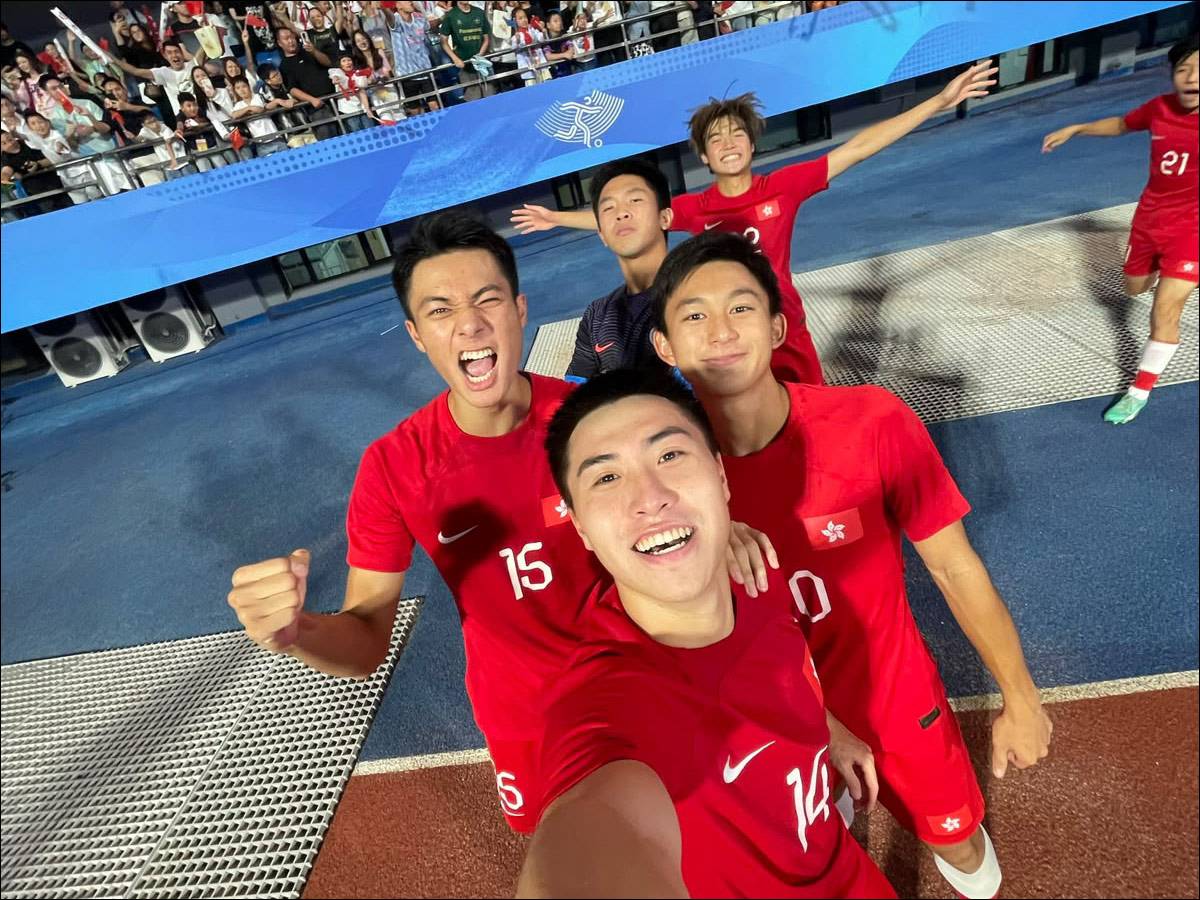
Lau played only a supporting role as Hong Kong embarked on the finest tournament run in its history, reaching the semi-finals against all expectations. Still, he describes it as perhaps the most enjoyable month of his life.
As the wins piled up, so did the surreal nature of it all, each one carrying Hong Kong deeper into rarefied air.
“There wasn’t as much pressure because we were already in pretty uncharted territory,” he recalls. “Anything we did from that point onwards was a plus.”
The further Hong Kong advanced, the more otherworldly the experience became. The hotel dining hall gradually emptied until only four teams remained.
“At some point it was literally just Japan, South Korea, Uzbekistan and us,” he recalls with a wide grin. “We were like, ‘Whoa, this is getting pretty serious now.'”
There were chance encounters with stars such as Lee Kang-in and Paik Seung-ho in the lift – moments that briefly blurred the line between underdogs and continental heavyweights.
“It makes you feel that we’ve kind of made it already,” Lau says. “I don’t want to say that we’ve made it to the very top, but we’re kicking it with these top pros.”
(Provided by Kyle Lau)
The month also captured the balancing act that had defined most of his life. While teammates celebrated victories late into the night, Lau often slipped away to finish university assignments.
After Hong Kong’s quarter-final win over Iran, he rushed off to finish his mathematics homework. One teammate even jokingly reminded him on social media that he should probably finish his homework before joining the celebrations.
Looking back, Lau laughs.
“It was pretty funny. We were a bit different from everyone else.”
That commitment to Hong Kong explains why, after announcing he would step away from professional football, Lau insisted he would always make himself available for international selection if called upon.
Some pundits interpreted the comments as underestimating the standards required for international football. But Lau believes they misunderstood his point.
“The point was that I would never deny a call up from Hong Kong,” Lau says, in response to his critics. “But I’m realistic – if I don’t play at this level, they’re not going to call me up. I’m not stupid.
“At the end of the day, it’s the coach’s decision.”
As a senior at Pomona, Lau had unsuccessfully applied for the Schwarzman Scholars programme to pursue a Master’s in Global Affairs at Tsinghua University.
A year later, he applied again.
This time, he got in.
For months, he kept the news to himself.
Lee Man were still chasing trophies. Hong Kong still harboured ambitions of qualifying for the 2027 AFC Asian Cup. Had qualification been secured, Lau says he almost certainly would have deferred the scholarship for a year.
Then, midway through the season, fans discovered the incoming Schwarzman Scholars class online.
The news spread quickly across social media.
“I was really surprised at how quickly it spread,” Lau admits, cheekily. “The only way to find out is to go into that website. I didn’t even know that the names got posted until someone posted it on Threads.”
The scholarship complicated matters.
So did football.
Chinese Super League clubs made enquiries. Lau received a serious offer after the EAFF E-1 Championship, only for it to disappear when the coach who wanted him left the club.
For a decade, football and education had comfortably coexisted. Now they demanded the same future.
“I think it was the toughest decision of my life.”
Ultimately, the choice wasn’t about walking away from football. It was about recognizing another once-in-a-lifetime opportunity.
“If it was a normal Master’s programme, I would’ve probably continued playing,” he says. “But this programme is too prestigious to pass on.
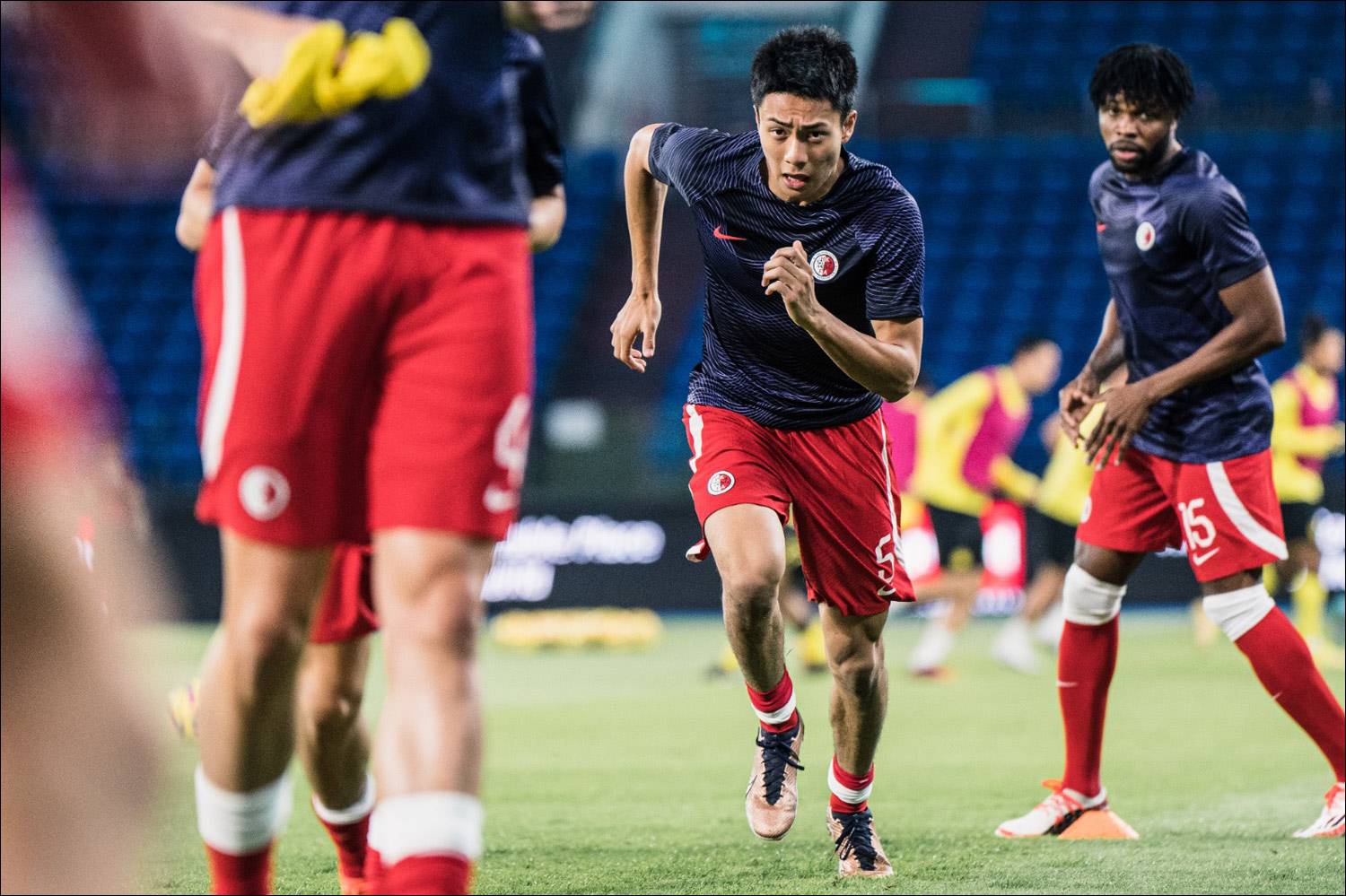
“Football is not forever. There’s life after football and sometimes you have to think long-term. I’m never going to reach the [English] Premier League. I’m never going to reach J1. I’m never going to reach those heights so I need to be realistic.
“Is it a better option to pursue one of the most prestigious Master’s programmes and set myself up well for something else in the future? Yeah, I would say so.”
(Provided by Kyle Lau)
What comes after Tsinghua remains unwritten. Lau has no existing contract or pre-contractual agreement with any club. He does not plan to play during his winter break.
However, he refuses to close any doors.
“My life motto is always, ‘Never say never,'” he says. “I’ve never wanted to lock myself into one path. I’m just taking it step by step, day by day.”
It is a philosophy that has quietly shaped his entire life.
He never expected to become a professional footballer until Szeto Man-chun called.
He never imagined scoring for Hong Kong until Darren Arnott’s half-time message, and 23 frantic seconds, changed everything.
He never thought a second application would earn him a Schwarzman Scholarship until it did.
Each time he believed his path had been settled, another one appeared. Perhaps that’s why he refuses to speak of football in the past tense — it remains part of who he is.
At 24, he knows his playing career may not be over. He also knows it might be.
Either way, he has made peace with it. Should he never play another competitive match, he says he will have no regrets.
Seven senior caps.
An unforgettable Asian Games.
A goal for Hong Kong at the stadium he spent his childhood looking toward.
Yet when asked how he hopes supporters remember him, he doesn’t mention goals, caps or trophies.
“I just want people to remember me as someone who gave everything he had, whenever he had the chance.”
On certain afternoons, when the light falls just right across Hong Kong Stadium, Kyle Lau still catches himself looking toward the pitch instead of through it.
(Provided by Kyle Lau)