
Some people may argue that the future of Hong Kong football depends on qualification for the Asian Cup. But to put such a massive burden on the players is unfair. Instead, fans should ask for this one simple thing: Make us proud to be Hong Kongers.
When the SCMP broke the story of Jørn Andersen’s potential hire, the source within the Hong Kong Football Association who leaked the news also admitted that they deemed qualification for the Asian Cup as a target.
Of course, qualifying the Asian Cup is an obvious target, if for no other reason than to have the prestige of being amongst the 24 best teams in Asia. But there are much deeper reasons why qualification is crucial to the future of the local game in Hong Kong.
Average attendance at Premier League matches has fallen below 1,000 spectators per match in every season since 2015-16 – more than five years ago. In the past three seasons alone, six clubs have withdrawn from the top flight for various different reasons. There is also the ever present problem of club bosses falling into financial problems and then, failing to pay their players on time.
In some ways, Hong Kong football is at its lowest point since the so called ‘Ice Age’ between 2001-2006 when big investors shied away from the local game and attendance at matches would often fall below 300. Local football needs the same jolt it received in 2006 when local businessman Steven Lo took control of South China and invested large sums of money into the Caroliners to turn them into a winner and make them popular again.
As I’ve written previously on Offside, professional football in Hong Kong isn’t sustainable if only hardcore, diehard fans know who the teams are, who the players are or when the matches are. And let’s be honest, there aren’t that many hardcore fans out there.
Hong Kong football has faded from the public consciousness considerably since the so called ‘Golden Age’ of the 70s and 80s. The number of entertainment options available to those who live in the city are much more plentiful than it was back in the day and we must focus on the future, not the past.
But what is the solution then? Simply put, Hong Kong football needs to be considered ‘cool’ again. And in order to be considered cool, Hong Kong football needs to break back into the mainstream.

Let me propose a question: What’s the difference between sport and art?
Answer: In art, the more that an artist or band is considered ‘underground’, the cooler they are perceived to be. Arts publications devote resources to seek out niches in hopes of discovering the next new trend, the latest tech, or the next band or artist that will make it big, before it happens.
On the other hand, a sport or sports league’s perceived cool factor is based in proportion to how many people follow said sport or league. The more people who find your sport or league cool, the more it gives ‘permission’ for casual fans to admit that they follow that sport or league too. And crucially, news publications – especially those in the mainstream – will not devote resources to covering a sport or league that is considered niche or uncool. They cater their coverage based on how many clicks a story is likely to garner.

Qualifying for Asian Cup may break the current chicken-egg scenario for professional football in the city.
Steven Lo understood that for Hong Kong football to receive coverage outside of the occasional story in the sports section, it needed to force its way into the conversation. During the 2010-11 season, South China signed former Manchester United star, Nikki Butt, and former Chelsea striker, Mateja Kežman, which helped them to achieve an average home attendance of 3,758 – the most of any club since the HKFA began designating home stadiums. The Caroliners also attracted sponsorship from Italian fashion giants Giorgio Armani, and the team’s success and popularity convinced the fashion house to make the South China squad the face of their advertising in Hong Kong.
But the tragedy here is that Lo should never have had to go to such lengths to bring attention to his team. South China was then, and still are, one of the most recognizable clubs in Hong Kong and perhaps remain the most recognizable Hong Kong club outside of the city. They should’ve been able to sell themselves.
In 2009, a year and half prior to Butt and Kežman’s arrivals, South China made it to the AFC Cup semi-finals where they drew over 37,000 spectators for the home leg, making it the largest crowd to watch a meaningful match in recent memory. 10 days after the ‘Sea of Red’ game – as it is known to locals – over 5,000 spectators turned up to watch the Caroliners play rivals Kitchee. Their next match against Sun Hei drew only 944 fans. The next one after that drew a mere 524.
Attention is fleeting and although the Hong Kong people have shown that they will turn up for big matches, they haven’t shown that they will turn up when the occasions aren’t nearly as big.
Not everything is doom and gloom for local football. If last summer’s Tokyo Olympics have taught us anything, it’s that when you wrap an athlete in Hong Kong colours and put them on a big stage, the Hong Kong people will get behind them. And if, by chance, they’re able to win, then they will live on forever as heroes.
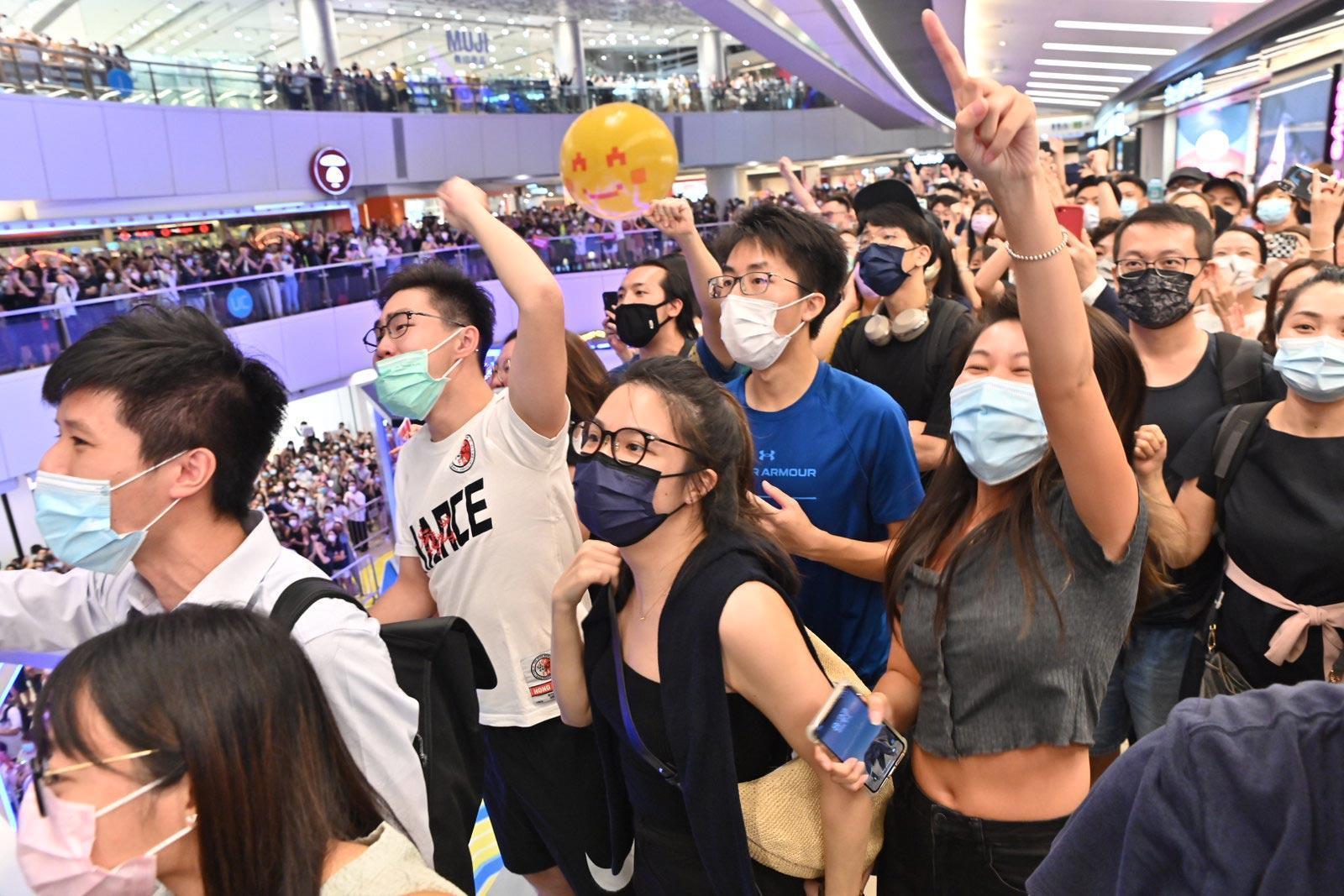
No one will soon forget the massive crowds who gathered in malls across the city to watch Cheung Ka-long win gold or Siobhán Haughey win silver – twice. Perhaps some readers of this essay will have been part of those crowds and experienced the collective elation when the pair won their medals. But regardless of where you were, the buzz that was felt around the city in the aftermath should give you hope if you’re a supporter of local football.
After the pair won, no one moaned about how Hong Kong could never produce world class athletes. Instead, people spoke of how proud they were to see two athletes from the city succeed, despite having received less funding and having been developed in an inferior sporting infrastructure to that of their competitors. The act of overcoming one’s obstacles to achieve a better outcome in life is very much in line with the Lion Rock Spirit – an ethos that is emblematic of what this city is about.
What will ultimately become of Cheung and Haughey’s successes is yet to be seen. After Lee Lai-shan won Hong Kong’s first ever Olympic gold in 1996, Tai Kok Tsui station – which was under construction at the time – was renamed Olympic Station in her honour. In the short term, Cheung has become the spokesperson for a number of different brands and Haughey now has her own line of athletic swimwear. Whether a generation of children will have been inspired to take up fencing or competitive swimming remains to be seen and the answer will not be known for at least a decade.
The 2023 Asian Cup presents a similar stage for the Hong Kong men’s football team. The tournament will be the most watched, non-scripted television event in the city during the four-week period over which it is scheduled. Therein lies the opportunity for the Hong Kong team – if they can grab it. Should they qualify, it could open the sport to much greater investment than it has ever seen in a long, long time. The HKFA may become less financially reliant on the $25 million subvention that it receives annually from the government. Certainly, it would convince current investors to continue to invest, having seen that their years of patronage of the local game has not gone to waste.
At the very least, having a seat at Asian football’s biggest party will finally give the many football fans in the city a team of their own to cheer for. The hope, of course, is that some of those football fans can be converted into Hong Kong football fans.
In truth, Hong Kong may not have a better chance to qualify for the Asian Cup in a long time. This isn’t to say that Hong Kong will not have its own team in the future or that the current group of players represents some sort of ‘golden generation’. Rather, it is acknowledging the reality that most of the players who will likely be starters under head coach Jørn Andersen are either in their peak or past it, and the players coming behind them don’t look like they’ve got the potential to be better.
Let’s compare this generation of players to the last, for instance. Hong Kong lost three reliable defenders when Chan Wai-ho, Festus Baise and Lee Chi-ho retired, but they have been able to replace them with Hélio, Leung Nok-hang, and Vas Nuñez, – of whom, the latter two look to have bright futures ahead of them on the mainland. Leung Yau-wai, who is currently playing in Portugal, also looks to be one for the future.
Defence won’t be a problem for Hong Kong. It’s further up the pitch where the team will struggle.
Hong Kong has yet to develop a number 10 with the same level of creativity and incisiveness as Lam Ka-wai. It has yet to find a player who can replace the team’s all time leading scorer, Chan Siu-ki. While some might argue that Sun Ming-him and Matt Orr are the next in line to take up Chan’s mantle, there remains a big gap in standard between the Premier League and international football. Even Sandro, who is one of the most prolific strikers in Premier League history, notoriously struggled for Hong Kong.
Granted, the team have gained a few players from the naturalization pipeline such as Wellingsson and Fernando, both of whom will provide much needed creativity on the wings. But realistically, these players have only one cycle in them before they’re not longer good enough to play at the international level. There doesn’t look to be many foreign players in key positions who Hong Kong can naturalize in the short or medium term, and no one at the HKFA should count on using naturalization as a strategy.
Throughout the long history of football in the city, there have been a handful of watershed moments. The last time Hong Kong appeared in the Asian Cup was 1968, which also marked the first year in which the HKFA allowed clubs to sign players as professionals.
One of the most famous matches in Asian football history happened in 1985 when the underdog Hong Kong team eliminated China, the 1984 Asian Cup runners-up, from qualifying for the 1986 World Cup. The following year, the HKFA controversially banned foreign players from playing in Hong Kong’s domestic leagues and the popularity of local football has never recovered since.
The most recent moment came in 2009 when Hong Kong won gold in football at the East Asian Games. This led to government backing for Project Phoenix, a master plan that was supposed to improve the Hong Kong team’s standing within Asian football but has, instead, been a failure.
While club football had its Golden Age, the Hong Kong team has never had a sustained run of success where they’ve qualified for major tournaments. But when I think of what Cheung, Haughey, and the rest of Hong Kong’s olympians did last summer, I’m reminded of a quote from the American poet Maya Angelou: “I’ve learned that people will forget what you said, people will forget what you did, but people will never forget how you made them feel.”
The point I’m trying to make is that for two weeks last summer, the top storylines weren’t entirely dominated by COVID or national security. Instead, they were about Hong Kongers being proud of their city in a time and place where civic pride is being increasingly suppressed in favour of national patriotism. The olympians made it cool again to vocally support Hong Kong and only Hong Kong, even if we all knew that love affair wasn’t going to last.
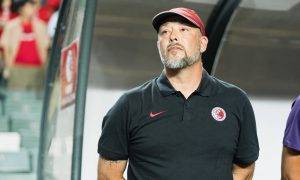
To his credit, Andersen understands the present situation. In his introductory press conference, he expressed his hope that “when the fans come to the stadium, they will see a team…that they can be proud of.” It’s difficult to believe that he wasn’t aware of the current political climate of the city before delivering that line.
But before anyone fantasizes too much about what qualification would mean for local football, the team must first qualify – and that will be no easy task. But it shouldn’t be on the shoulders of the players to save Hong Kong football. No, the minimum expectation – the only expectation – should be to make Hong Kong people proud to be Hong Kongers again.
Hong Kong will face a team from Pot 3 on Matchday 1, who will likely to be most evenly matched opponent for Hong Kong, at least on paper. Andersen has said that he will set up the team to attack in those types of matches, but it is essential that the team do not lose that match. If Hong Kong cannot clinch qualification in by the end of Matchday 2 – and chances are, they won’t – they must ensure themselves of at least a fighting chance of advancement going into Matchday 3 so that they can build some buzz around the city.
Maybe qualification for the Asian Cup will end up making negligible impact in the long term for local football. Maybe it’ll be nothing more than a fleeting moment – and Hong Kong football has seen plenty of those.
But for the Hong Kong people, both hardcore football fans and non-football fans, to still have hope going into the final match is as much as we can ask for. Let fans dream a bit. Let them believe. Let them fall in love with this city and this team again, even if we all know it won’t last.
To Jørn Andersen, the staff and the 25 players who will be selected come June: Our city turns its lonely eyes to you.
[ik_fb_like_button page_id=”https://www.offside.hk” height=”45″ colorscheme=”light”]