
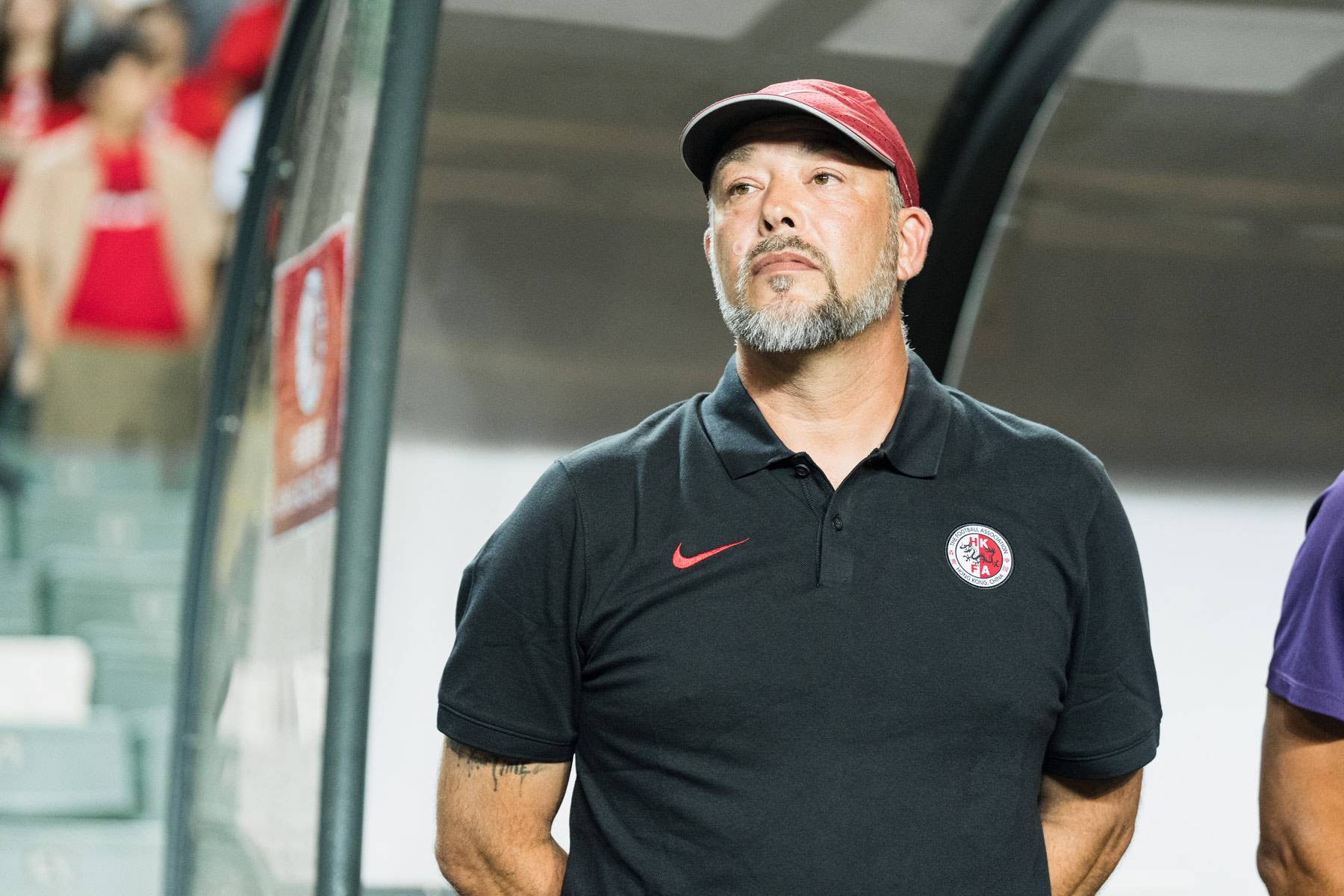

The wheels on Roberto Losada’s tenure have come off almost as soon as it’s left the station. Can he get the train back on the rails?
For years, Roberto Losada had coveted the Hong Kong head coaching job. In the days after former head coach Jörn Andersen stepped down in May 2024, Losada was named as an interim assistant coach for the June window. He had just won the second of what would become three consecutive Coach of Year awards, and though he denied at the time that he would apply for the head coach position, he did not deny that he was interested in filling the role some day.
Just as Hamlet long desired the throne and understood its politics before stepping in, Losada – known affectionately as ‘Chino’ by fans – knew what he was getting into. Yet now that the role is his, it increasingly resembles a poisoned chalice. No sooner had he taken the role, he began to take fire from the slings and arrows of Hong Kong fans.
The tension did not begin after his appointment last week. It began with a series of underwhelming performances in the Guangdong-HK Cup at the turn of the year where Hong Kong looked second best despite calling in a number of experienced players. A defeat to India in March further unsettled sections of the fanbase leading to apprehension towards his candidacy.
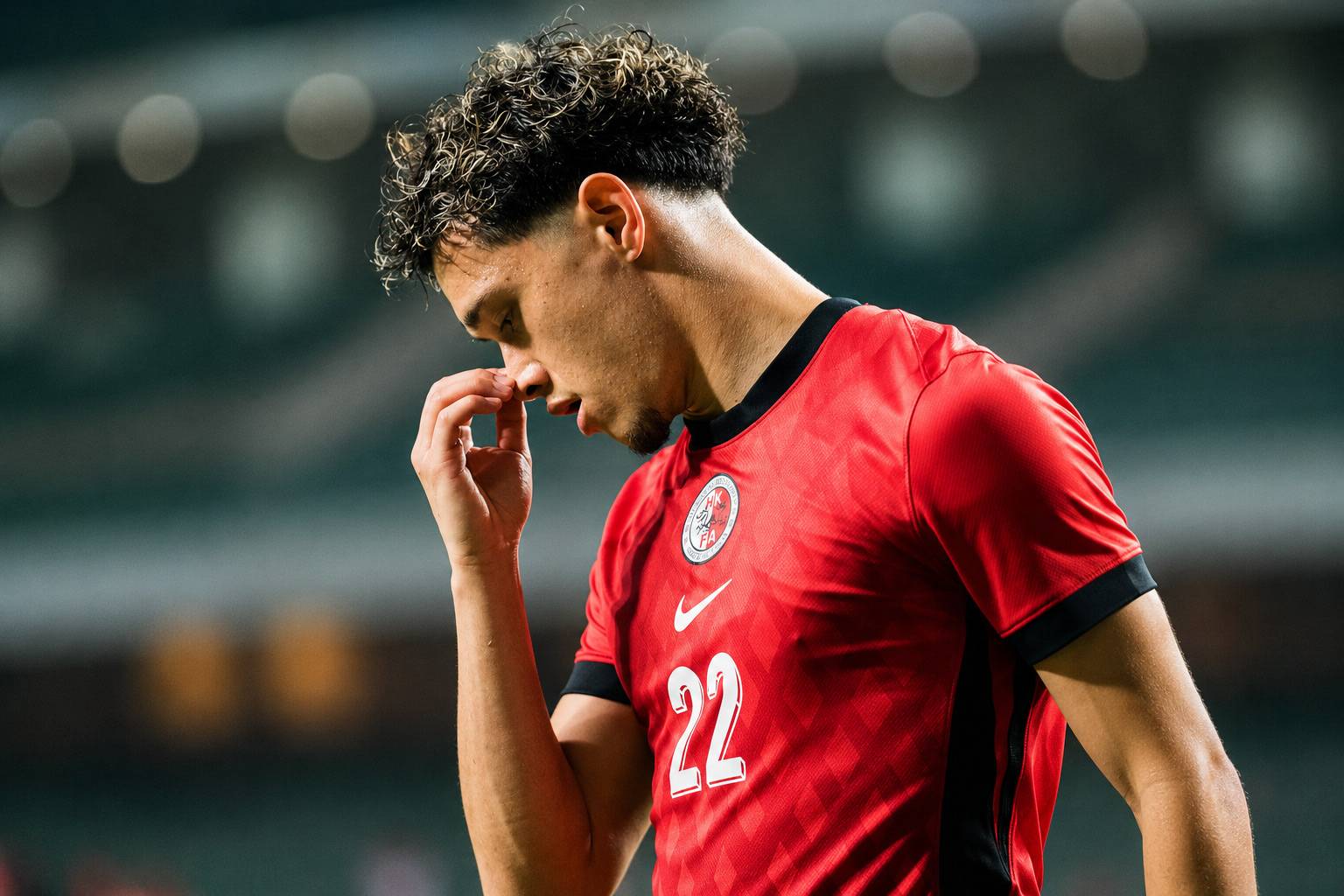
Raphaël Merkies started both the Mongolia and Cambodia games on the bench (Credit: Santiago Kwok)
Losada’s appointment was supposed to bring familiarity, stability and trust in someone who “understands the Hong Kong football ecosystem”, as HKFA chairman Eric Fok phrased it at the introductory press conference. After sifting through 300 applicants, Fok hired the former Hong Kong international because he was the “most suitable candidate at this time”. Losada lauded his ability to develop young players at Eastern while competing for trophies and selling promising players overseas.
Yet, earning his first victory as head coach later in the day did little to ease the concerns of his detractors. The 2-0 win over Mongolia, who had not played since November 2024 prior to this window, fell short of fans’ expectations. In the aftermath, fans could be heard chanting that “Singapore beat Mongolia 4–0,” a comparison that quickly reframed a win as underwhelming rather than routine.
The 2–0 defeat to Cambodia on Tuesday in which Hong Kong failed to register a single shot on target and were comprehensively outplayed has only intensified the debate as to whether he was the “most suitable candidate”. It was not just that Hong Kong had lost to Cambodia for the first time in 55 years, it was that deep concerns over the lack of tactical identity remained unresolved. Limited midfield progression, fragmented possession phases, and an absence of discernible attacking patterns have plagued Losada’s tenure over the past six months. Even supporters willing to accept a transition period struggled to identify what the team was building toward.
Tensions boiled over post-match when fans confronted the head coach, leading to an awkward exchange.
Losada, for his part, has remained steadfast in his beliefs, saying in the post-match press conference, “It is still a long journey for [Hong Kong] …We are trying to change things and it’s going to take time.” He also tried to frame the result as part of a broader development curve, noting in his apology to supporters that some of the players who played against Cambodia were only 19 or 21 years old.
However, that explanation is colliding with a different expectation structure—one shaped not just by impatience, but by familiarity. Losada has been part of Hong Kong football for over 15 years as both player and coach, most recently guiding Eastern between 2021 and 2025. It was at Eastern where he helped to develop several current Hong Kong players in Ng Yu-hei, Timmy Ma, and Yue Tze-nam. This is a man who, in all respects, has the necessary qualifications for the position.
Yet it never is that simple for Hong Kong fans. Whereas fans encourage foreign players in the Hong Kong Premier League to stay for seven years in order to obtain a passport to represent Hong Kong, that same Hong Kong passport works against them when applying to be Hong Kong manager. Foreign coaches are favoured because they can bring a fresh pair of eyes, new ideas and training practices to a team whose style of play was once described by Andersen as being “two decades behind.” Time and grace is afforded to foreign coaches for them to learn about the players at their disposal because the expected payoff is that the ceiling for what the team can achieve will be higher.
There had been hope that Losada, as a naturalized Hong Konger, could be a happy medium – someone who already understood the talent pool, could hit the ground running, but would bring tactical innovation as he had received his coaching education abroad. The HKFA may not have seen it the same way, but the fans are the ones who buy tickets to support the team at home and away.
The Mongolia match illustrates this tension. The narrow 2–0 win was not received as a foundation but confirmation of fans’ worst fears since his appointment as interim head coach. The reference to how “Singapore beat Mongolia 4–0” became symbolic of the gap between expectation and output, even if Singapore are currently a better side than Hong Kong. It reflected a broader anxiety at how the team looked like a typical Premier League club where players are slow to react and make decisions, while offering little movement off the ball – often standing still as they wait to receive the ball.
Those fans who had preferred a foreign coach for the job had reasoned that players develop such bad habits when trained by local coaches their whole life, many of whom have never coached abroad. There had been hope that Losada could be an exception to this rule, though that has yet to manifest into reality.
Perhaps more patience could’ve been granted by fans if he had selected different players in his starting XI. The starting nods given to Juninho, Vas Nuñez, and Remi Dujardin were puzzling given that all three are either in their prime rather than long-term development options. Even with such players, the team looked devoid of leadership and inspiration, leading to mounting frustration and consternation.
The deeper issue is that Losada’s argument that fans need to trust the process and give him time is not being rejected outright, but it is being challenged by what fans can already see on the pitch. Time is not the problem in itself; the problem is that time currently appears to be producing repetition rather than progression.
Across Losada’s six matches in charge, there is limited evidence of an evolving tactical structure. The goals scored against Guangdong and India can just as easily be chalked up to individual brilliance rather than tactics. The team has often appeared short of fluidity and cohesion, with little consistent evidence of a clearly identifiable game plan across all three phases of the pitch.
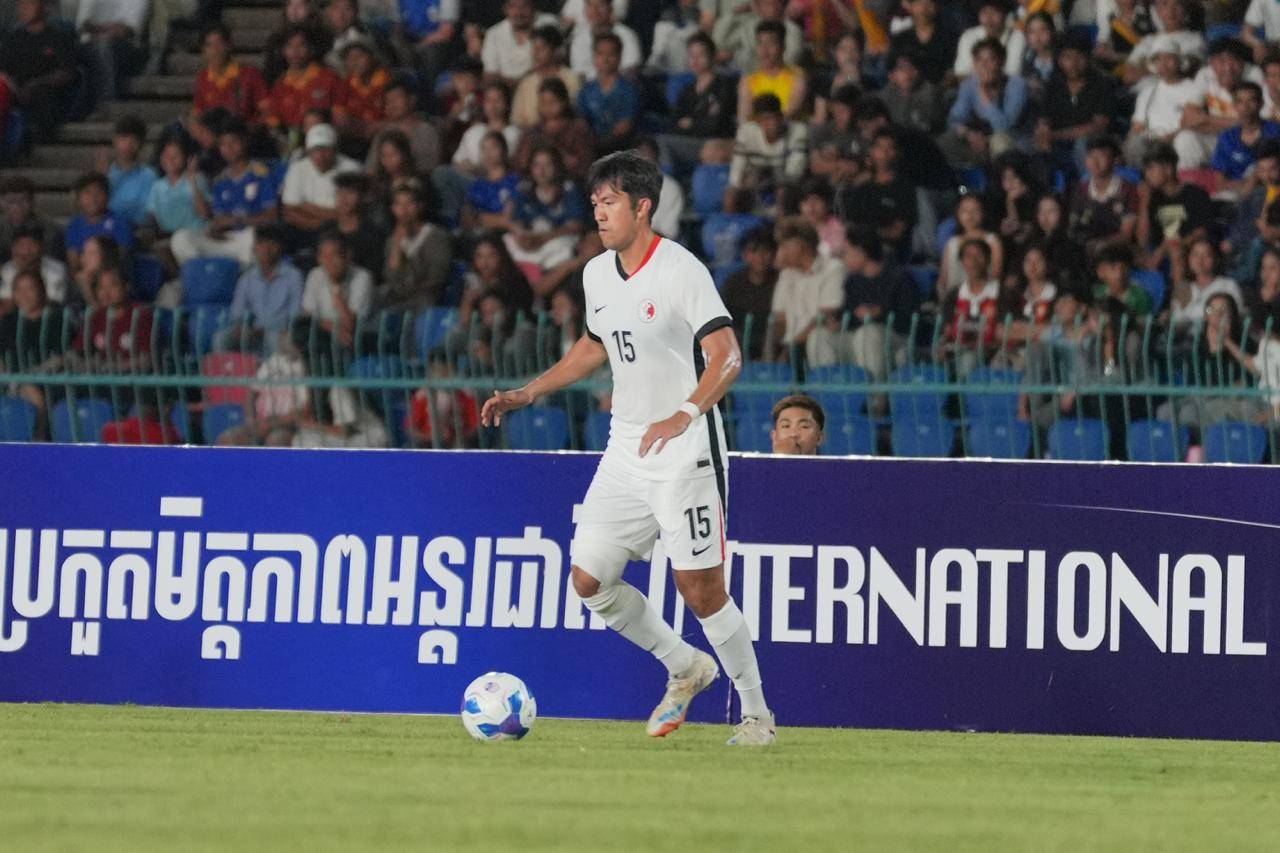
Remi Dujardin was handed his first cap against Cambodia (Credit: HKFA)
Internally, the structural challenge is also clear. The team’s reliance on naturalized players has been a defining trait in the past decade, but the current crop is aging. Juninho and Everton Camargo were both called up for the June window, but they are approaching the end of their international relevance. By the time the next Asian Cup cycle peaks in 2032, they likely will not be around. Beyond Callum Beattie, the pipeline is thin, with meaningful new naturalizations unlikely before 2029. This is not a temporary dip but a sustained fallow period in talent that cannot be solved quickly.
This a challenge that was highlighted by Offside four years ago, and one that Losada – to his credit – acknowledged at his introductory press conference. During his interview process, he presented a two-year plan to navigate it – focusing on rebuilding foundations, integrating younger players, and gradually establishing a clearer tactical identity. With a youthful injection of talent, he could perhaps bring back the high press of the Andersen and wed that with the possession-based system that Ashley Westwood had tried to install.
The image of him walking towards the away support after the Cambodia defeat is a poignant metaphor for the job he has at hand. A different coach may have seen the upcoming shortage in talent and deemed it a poisoned chalice. But Losada, on his own volition, has decided to walk into an ambush and plead for patience, believing his vision for the team is correct.
The competitive calendar will not wait for it to mature. While 2030 World Cup qualification begins next year, the immediate pressure point arrives sooner with the ASEAN Cup Division 2, which Hong Kong will host in September and October. That tournament will raise expectations significantly, not only because of home advantage but because it will be treated as a test of direction rather than experimentation.
Losada has repeatedly insisted that judgement should be delayed. “I don’t need to change the mind of anybody,” he said, adding that he respects all opinions “as long as it is not insults.” But international management rarely allows for clean separation between process and perception. When performances lack structure, explanation becomes secondary to visibility.
There is still a plausible long-term case for Losada. His track record at Eastern—three Coach of the Year awards, multiple domestic trophies, and a reputation for developing players into international moves—suggests he is capable of building functional systems over time. Even his supporters within the squad, such as Ng, have praised him for understanding local players and giving them confidence, calling him “the best coach in Hong Kong.”
But that reputation is now being tested in a different environment, where the constraints are harsher and the feedback loop faster. The issue is not whether Losada understands Hong Kong football in theory – it is whether that understanding is translating into a visible, functioning structure in practice.
At the moment, the gap between explanation and evidence is widening. Patience remains his central message, but time alone does not resolve questions about organisation, patterns of play, or attacking identity. In the absence of those things, every result—whether a narrow win or a heavy defeat—begins to feel like the same data point in an unsettled system.
That is why the concern is not yet that his tenure has collapsed, but that it is already being interpreted through a lens of stagnation. In football, perception rarely waits for completion. And right now, Losada is asking for time in a context where time is already being spent under scrutiny.


