


This season, the HKFA reintroduced a triple round-robin in the top flight for the first time in 35 years. The result was the most exciting title race in years. But with the possibility of more teams next season, will the triple round-robin survive?
That wasn’t so bad, now, was it?
Another season of the Premier League is in the books, and for the second time in history, Tai Po are champions of Hong Kong.
But for a while, it didn’t look that way. Tai Po, who topped the table for a record 22 matchdays this season, conceded pole position in the table to Lee Man after a disappointing draw against Southern in early May. Both clubs, and Eastern, entered the penultimate matchday with a chance to win the title, marking the latest point in the season in league history where three teams remained alive in the title race.
By the final day, it was down to the Greens and the Bees, and with the latter in control of their destiny, Tai Po could only win their match and hope for help from Lee Man’s opponents, Rangers.
Tai Po took care of business. Lee Man didn’t, and so on final day, the lead at the top changed one last time to cap off a roller coaster of a season.
All of this context is important as there had been fears that playing a triple round-robin, whereby each club would face each other three times over the course of the season, would make each match less important. Rangers director Philip Lee had stated his opposition to a triple round-robin in the past, saying that it was “boring” and that “no one will watch the third round-robin as it’s the same teams over and over again.”
The opposite of his prediction is true, however, as the average attendance has rebounded from a historic low of 577 spectators last season to 685 this season.
Make no mistake, attendances are nowhere near the levels they were at before the pandemic, and the HKPL Committee has much more work to do in this regard. Matches that do not involve clashes between the so called ‘Big 4’ clubs are seen as irrelevant to casual viewers.
Perhaps they could lean into the narrative of unpredictability, and how some of the best games this season have come when teams have met for the third time. Consider the memorable 3-2 comeback victory by Kowloon City over Kitchee in February, after the latter had beaten the newcomers by a combined score of 11-1 over the first two meetings.
Or the six-goal thriller between Eastern and Tai Po in April attended by a season high 2,455 spectators.
Or the one on final day when Lee Man lost to Rangers, opening the door for Tai Po to storm through and win the title.
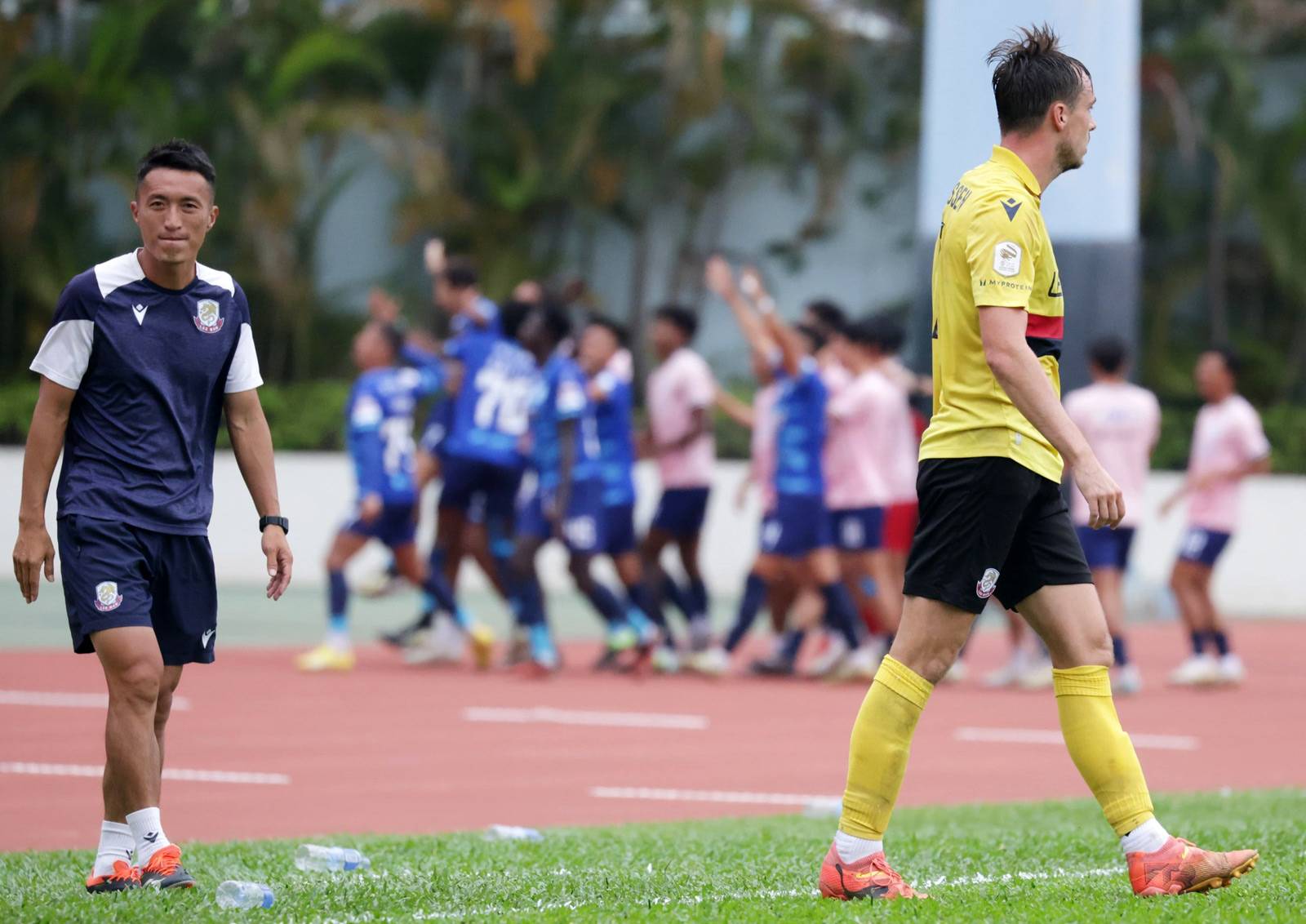
A dejected Mitchel Paulissen walks off the pitch as Lee Man lose the title on final day (Credit: Tony Wong)
This is not to say that all of this was part of a clandestine masterstroke by the HKFA. The organization were forced into making a change to the structure of the season due to the AFC’s mandate that all clubs participating in ACL Elite or ACL 2 must have playred a minimum of 27 matches in the previous season. But with only nine clubs in the league, the old format of a double round-robin league, combined with the Sapling Cup, Senior Shield and FA Cup would’ve only guaranteed clubs of 24 to 26 matches.
The HKFA considered various options including splitting the table after a double round-robin and doing a double round-robin promotion and relegation round. At last, they settled on reducing the number of Sapling Cup matches and reintroducing a triple round-robin in the league, ensuring that each team plays the minimum 27 matches.
The consequences has been that the league has developed a rhythm of weekly matches. Instead breaking up the league schedule with Sapling Cup matches, the HKFA have scheduled all Sapling Cup group stage matches for the international breaks, thereby minimizing disruption. Imagine if your favourite television continued to air in the same timeslot, but with fewer commercial breaks – that’s what the Premier League has become.
It had become an unwritten tradition for teams to rest players who were carry knocks for Sapling Cup matches, or to ask players to deliberately pick up their fifth yellow card of the season in the week prior to a Sapling Cup match, thereby allowing the player to sit out a less important match. These were a tacit acknowledgements by clubs that they did not value Sapling Cup on the same level as the other three competitions.
After the number of Sapling Cup matches were reduced, the knock-on effects have been that clubs and players have less places to hide. Over the course of the season, we have seen clubs deal with suspensions and injuries in real-time, whereas in the past, fans may not have noticed players missing during Sapling Cup weeks. This has led to more interesting storylines in the league as head coaches try to juggle their lineups each week to deal with absences.
Though some hardcore fans may miss the youth-focused tournament, 10 years of data has shown that casual fans do not pay attention the tournament until the semi-finals. By cutting the group stage in half and replacing those matches with league matches, the HKFA have inadvertently made the Premier League easier to follow for casuals. They have increased the inventory of a product that fans want to pay to watch, and reduced it for a product that fans don’t want.
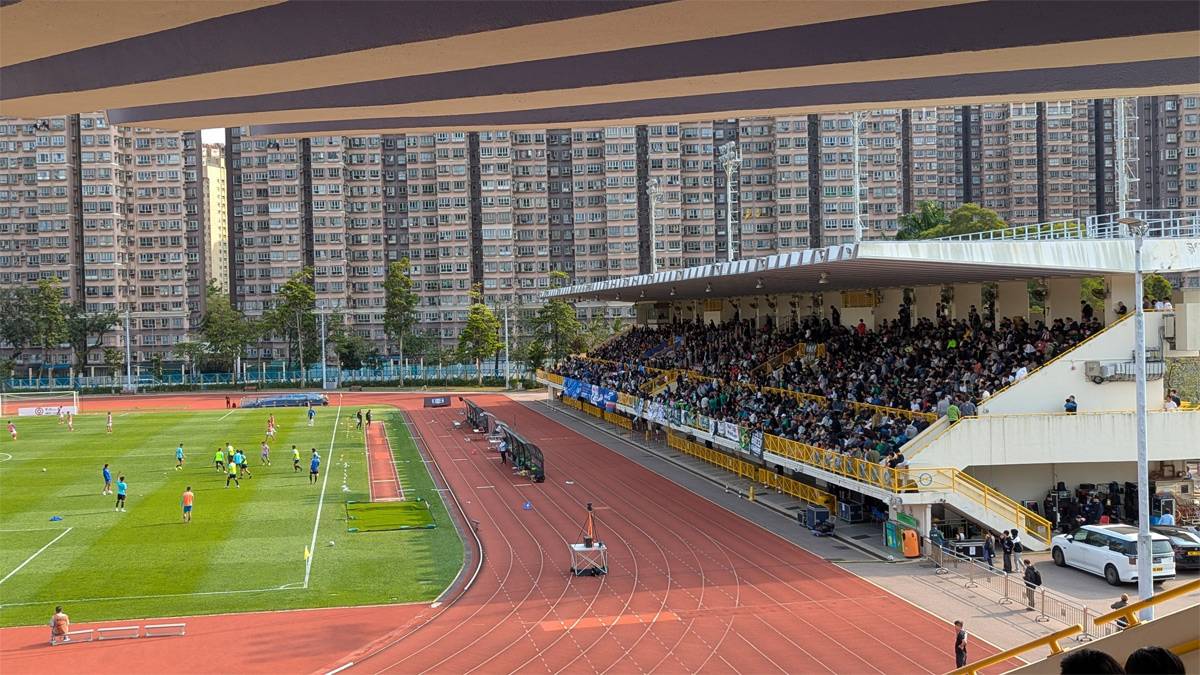
Tai Po’s second meeting of the season with Eastern drew their largest crowd at Tai Po Sports Ground since May 2019 (Credit: Dickson Fung)
But with the Sapling Cup likely to be discontinued altogether next season, there are questions as to how the league will be structured next season. As always, these questions are tied to the number of teams. For now, all nine of the current Premier League clubs are committed to staying.
There are the rumours of a potential tenth, or perhaps, eleventh team next season. A ten-team league would make things fairly straight forward for the HKFA as a triple round-robin would produce 27 league matches on its own, before accounting for cup matches. It would also alleviate the problem of having one team sat idle every week as there would be an even number of teams.
Offside have understood that First Division club, Eastern District, are still exploring the possibility of promotion next season. The club, which finished eighth, have never competed in top flight before and have avoided public comment about their intentions.
More intriguing than the possibility of a First Division club joining the Premier League is the prospect of a mainland club joining the Premier League. Canton United, a club based on Guangzhou which competed in this season’s Chinese Super League – the fourth tier of Chinese football – have confirmed that they have spoken with the HKFA about the feasibility of joining the league.
There are differing opinions within the football community about whether both Canton United and Eastern District will join next season. Some believe that Eastern District will be given priority, while others believe Canton’s prospects are farther along. Some believe that the HKFA wish to have an even number of teams in the league next season, while others believe an odd number is not a big concern.
One piece of information that Offside was able to gather was that Canton United have powerful backers within the industry in their corner, including Philip Lee. The extent of his involvement is unknown, but some insiders believe that this increases the chances that Canton will debut in the league next season.
Should the league return to 11 teams next season, the question remains as to what format will be used? A triple round-robin would produce 30 matches, but could force some cup matches to be played midweek in order to accommodate. A double round-robin with a promotion and relegation round would not be enough, even though it would be easier for schedule makers and the Leisure and Cultural Services Department.
The real priority for the HKFA should be to ensure maximum interest and entertainment, and that’s what a triple round-robin provided this season.


