
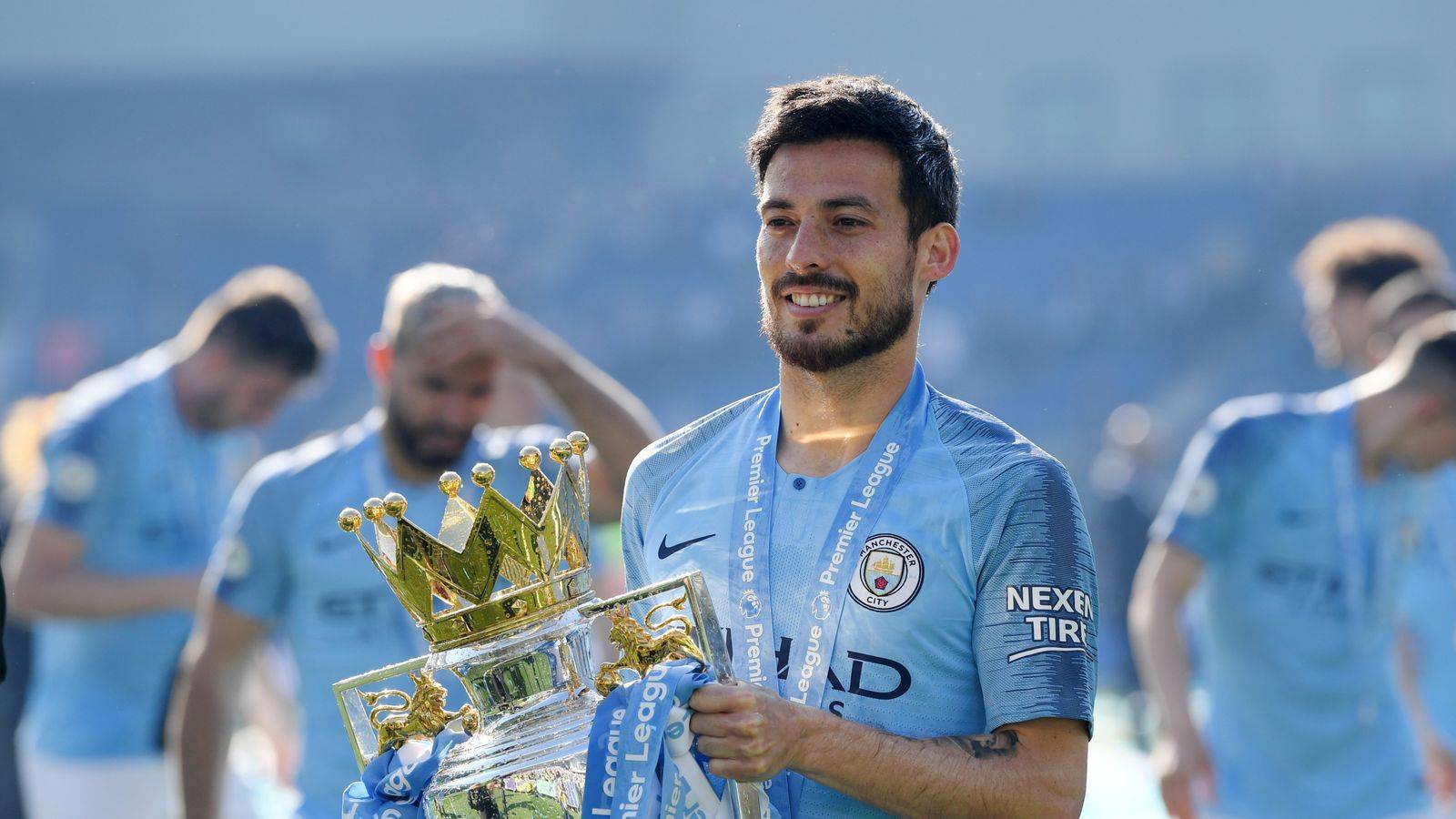

David Silva wasn’t brought into to save Sha Tin’s season, but that may not be the point. His signing is a marketing gamble—and one Sha Tin can’t afford to get wrong.
There is something slightly absurd about David Silva, one of the great midfielders of his generation, preparing to play in the Hong Kong Premier League at the age of 40.
It is unthinkable, outrageous, and perhaps even comedic all at once. But, there is some logic to it and regardless of how long it lasts, everyone will be watching.
Silva retired in 2023 after suffering an ACL injury with Real Sociedad. He has not played competitive football since. When he eventually arrives in Hong Kong, he is expected to undergo fitness testing and a period of training before making his debut. The initial agreement appears to cover only one match, after which Supreme Sha Tin will assess his condition and decide whether to continue the partnership.
In other words, this is will not be the start of Silva’s Hong Kong career. Instead, it will be cameo.
That distinction matters, because it is tempting to assess this signing as if Sha Tin have just recruited a 40-year-old footballer to solve their problems.
They haven’t.
At least, they shouldn’t be.
Sha Tin are ninth in the league and sit above the relegation zone only on goal difference. Owner Jim Wong has already made clear what his sporting priority is: staying up. When asked about more ambitious possibilities, he reiterated his focus was simply to avoid relegation.
A player who retired three years ago, has not played since and may only appear once or twice is unlikely to be the difference between relegation and survival.
And that is before considering the precedents.
Hong Kong football has seen famous names arrive at the end of their careers before. Diego Forlán came to Kitchee as a World Cup-winning superstar and was still capable of producing moments, scoring six goals and providing three assists. But accommodating him came with a sporting cost: Kitchee had to leave leading scorer Lucas Silva out of its AFC Champions League registration.
Nicky Butt and Mateja Kežman arrived at South China with considerably greater reputations than their remaining footballing output. By that stage, both were shadows of the players they had once been.
Silva may prove different. Perhaps his fitness is better than expected. Perhaps one magical evening is still sitting somewhere in those famous legs.
But betting on that would be missing the point.
The football case for Silva is weak. The marketing case is compelling.
And, importantly, Jim Wong has never pretended otherwise.
In an interview earlier this year, Wong was asked about the possibility of signing aging foreign stars. His answer was unusually candid. He said he was interested in players who had “star power” with Hong Kong supporters, and that if the price was reasonable, such a signing could work as a “marketing gimmick” — provided the player actually delivered something when he appeared.
Silva is almost a perfect real-life test of that theory.
Consider what Sha Tin have already accomplished without him.
Their opening league match away to Eastern attracted 3,329 spectators, the highest attendance for an opening match in nine seasons. Their second match, against Lee Man, drew 4,592 — the HKPL’s highest single-match attendance in three years.
Those numbers matter more than Silva’s eventual minutes.
They suggest that Wong has identified a market that Hong Kong football has historically struggled to reach: people who might not be deeply invested in the quality of the football, but can be persuaded to attend because there is an experience attached to it.
His understanding of how to run a Premier League club is discernibly different than the orthodox approach taken by other clubs. However, early returns suggest that Wong’s push to make his club Box Office entertainment seems to be working.
Wong comes from the entertainment industry, and his approach to Sha Tin reflects that background. He has spoken about constantly developing ideas, testing them and finding ways to bring more people into the club’s orbit. He has talked about marketing, social media, merchandise, memberships, collaborations and creating a sense of belonging around a team that represents its district.
Later, he described the broader objective in even more revealing terms. Rather than simply spending millions to build a team, he wants the club’s members, ticket buyers and supporters to help create the financial foundation that allows it to grow.
All of that seems to juxtapose against Silva’s signing, one that will not be cheap. Fans could rightly argue that, for the price of a Silva cameo, the money could be invested in multiple players.
However, Silva wasn’t signed to make Sha Tin better. He was signed because he makes Sha Tin interesting.
There is a difference and one not without distinction.
A newly promoted club has a difficult commercial problem. It needs to create buzz. It needs for people to care. It needs them to buy tickets, shirts and memberships. It needs sponsors to see value. It needs the club to become something more than 90 minutes of football every other weekend.
Wong has explicitly talked about the importance of finding ways to keep people interested and bringing more of them into the club. He has also discussed the possibility of making high-profile signings a recurring feature — not necessarily because supporters will come every week for a particular star, but because the hope is that, over time, they become supporters of Sha Tin itself.
That is a much more interesting proposition than the notion that David Silva is going to kick a ball in a public sports ground. The question is whether Sha Tin can turn David Silva the attraction into Sha Tin the product.
That is where the signing will ultimately be judged.
Suppose Silva plays once or twice, attracts a huge crowd, sells shirts, generates international coverage and gives the club months of social-media content. Suppose he then disappears.
If those supporters disappear with him, Sha Tin have bought a moment.
If they remain, the club has bought something much more valuable.
There is potentially an ideal stage waiting for that moment. Sha Tin’s first home game at the renovated Sha Tin Sports Ground is expected to be January 10 against Tai Po. If Silva remains involved and is fit enough to play, that could become less a league fixture than an event: the district’s new stadium, a famous World Cup winner, a club trying to establish its identity and, potentially, thousands of people who want to say they were there.
That is the sort of occasion Hong Kong football needs more of.
But there is a danger in all of this.
Marketing can get people through the gate.
It cannot keep a team in the Premier League.
And that distinction is especially important for Sha Tin because their footballing situation is precarious. The club’s impressive crowds have arrived alongside a team that has struggled for results. A glamorous signing can distract from that reality, but it cannot change it.
If Sha Tin are relegated, the David Silva experiment looks very different.
The club could have generated headlines around the world, attracted its biggest crowds in years and created a remarkable amount of attention — only to lose its place in the league.
That would be a spectacular marketing success attached to a sporting failure.
And sporting failure has consequences. The audience that came to see Silva may not automatically follow the club into the second tier.
This is why it is important not to confuse attention with growth.
Sha Tin’s 3,329 and 4,592 crowds are encouraging. They show there is an appetite for what Wong is building. But the real achievement would be turning those one-off spikes into a sustainable audience.
That is precisely what Wong’s philosophy appears to be trying to accomplish.
He has spoken about membership and ticket revenue as part of building a club that can support itself rather than one dependent on an owner simply writing increasingly large cheques. He has spoken about belonging. He has spoken about marketing. And, perhaps most tellingly, he has openly acknowledged the commercial logic behind signing ageing stars.
There is nothing inherently wrong with that.
Football clubs have always sold dreams.
The mistake would be pretending that every dream has to be a footballing one.
David Silva is unlikely to rescue Sha Tin’s midfield. He may not even play enough football to meaningfully influence their season.
But he could help persuade someone to buy their first Sha Tin shirt.
He could put a teenager in the stands who has never watched an HKPL game.
He could persuade an old Manchester City supporter to visit Sha Tin Sports Ground.
He could generate enough attention for a sponsor to become interested.
He could help turn a newly promoted district club into something people recognise.
Those are legitimate returns on a football signing.
It is logical to be skeptical about David Silva the player. Everyone should be. A 40-year-old who has not played for three years is not an obvious answer to a relegation fight, and history gives us plenty of reasons to be cautious about famous veterans arriving in Hong Kong.
But let us also be open-minded about David Silva the marketing proposition because Wong has been transparent about what he is trying to build.
He is trying to create a club that people feel belongs to them. This goes beyond 11 good footballers or the head coach.
If David Silva helps him do that, then the signing has worked — even if Silva barely kicks a ball.
There is only one condition and that is that Sha Tin must stay up.
Otherwise, the most famous player in their history will have been part of a remarkable story about a club that forgot the football was the reason the story existed in the first place.
David Silva wasn’t brought into to save Sha Tin’s season, but that may not be the point. His signing is a marketing gamble—and one Sha Tin can’t afford to get wrong.
